|
Gilbert
& Sullivan
|
|
a
selling exhibition of memorabilia
|
|
ARCHIVE:
Sir
William Schwenck Gilbert
|
|
|
|
This archive page lists all of Gilbert's plays from 1863 until his death, illustrated with programmes where possible, and giving run lengths, where that information is available. (Run lengths of earlier plays are often estimates, largely based on announcements in The Times, but with some assumptions about matinees and cancelled performances.) Some, but not all, revivals and provincial tours are also included. Joint works with Sullivan (titles highlighted in red) are only represented by a single programme for each production, as tours are noted elsewhere in the archive pages. Opening night dates of first productions are highlighted in purple. Most items on this page are not currently for sale. All early items for sale can be found here. |
| 1863 |
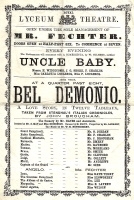 |
Uncle Baby What is generally believed to have been Gilbert's first produced play, Uncle Baby, was a curtain raiser to John Brougham's drama Bel Demonio at the Royal Lyceum Theatre. It opened on 31st October 1863, and was not well received by the critics, which may explain why Gilbert conveniently forgot to mention it in later years. It had its final performance on December 19th, having run for only about 43 performances. This small format programme is undated. Larger poster-style playbills were also produced. |
| 1866 |
|
Hush-a-Bye Baby This pantomime by W.S. Gilbert and Charles Millard,opened at Astley's Theatre on 26th Dec 1866. The full title was, Hush-a-Bye Baby, on the Tree Top or Harlequin Fortunia, King Frog of Frog Island, and the Magic Toys of Lowther Arcade. The final performance was on March 29th, 1867, suggesting a run length of around 81 performances. |
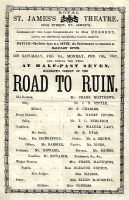 |
Dulcamara Dulcamara, or The Little Duck and the Great Quack, a burlesque of Donizetti's L'Elisir d'Amore, opened at St James' Theatre on 29th December 1866. According to this programme the music was "by" Mr. Van Hamme (it has been suggested elsewhere that he simply arranged the music). On opening night it was the afterpiece to Dion Boucicault's play Hunted Down. When this programme, dated 9 & 11 Feb 1867, was printed the forepiece was Holcroft's comedy Road to Ruin. Many of the cast were in both pieces; Henry Irving was in the comedy but not in Gilbert's musical, but he is named as Stage Manager for the evening. Dulcamara closed around 18th April 1867 after about 120 performances. |
| 1867 |
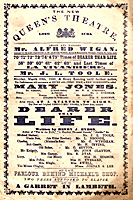 |
La Vivandiere St. James Hall in Liverpool hosted the premiere of Gilbert's La Vivandiere or True to the Corps on 15th June 1867. A burlesque on Donizetti's La Fille du Regiment, it also marked Gilbert's debut as director. The music was arranged by Ferdinand Wallerstein from themes by Offenbach and others. The piece opened in London on Jan 22nd 1868, at Queen's Theatre, closing after 64 performances. J.L. Toole, who would create the title role in Thespis, played Sulpizio and the first Little Buttercup, Harriett Everard, was Maria's Mother. Tonio, the male lead, was played in breeches by Miss P. Markham. |
|
Robinson Crusoe The first of seven Gilbert plays to premiere at the Theatre Royal Haymarket, Robinson Crusoe or The Injun Bride and the Injured Wife was a burlesque co-authored by WSG, H. J. Byron, Thomas Hood, H. S. Leigh and Arthur Sketchley. It was performed during the afternoon of July 6th 1867 at a single charity matinee performance, for the benefit of the mother of Paul Gray, a Fun cartoonist who had died in December at the age of twenty four. |
|
Allow Me To Explain Gilbert's first "straight" play, this one-act farce opened at the Prince of Wales Theatre on 4th November 1867. The last night appears to have been exactly one month later, on December 4th, giving an estimated run length of just 27 performances. |
|
Highly Improbable Whe one door closes another opens! Another one-act farce, Gilbert's Highly Improbable opened at the Royalty Theatre on 5th December 1867 and closed on 31st January 1868, having run for approximately 49 nights. |
|
Harlequin Cock-Robin and Jenny Wren Another pantomime with an impossibly long title, typical of the period, Harlequin Cock-Robin and Jenny Wren or Fortunatus and the Water of Life, the Three Bears, the Three Gifts, the Three Wishes, and the Little Man who Woo'd the Little Maid opened at the Lyceum Theatre on 26th Dec 1867. The panto apparently closed on 28th February 1868 having been seen c.83 times, including three matinee performances each week. |
| 1868 |
|
The Merry Zingara This burlesque on The Bohemian Girl, by Balfe,The Merry Zingara or The Tipsy Gipsy and the Pipsy Wipsy, to give it its full name, opened at the Royalty Theatre on 21st March 1868 and closed at the end of the season on 17th July. The run was therefore of the order of 102 performances. |
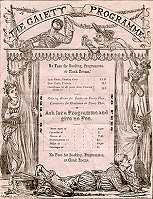 |
Robert the Devil Gilbert's opera, Robert the Devil or The Nun, the Dun, and the Son of a Gun, was the first production at the new Gaiety Theatre on 21st December 1868, and was based on Meyerbeer's opera Robert Le Diable. This programme dates from January 30th 1869, when the piece was preceded by the curtain raisers On the Cards and The Two Harlequins. By March 29th 1869, Robert the Devil was preceded by T.W. Robertson's play Dreams and The Two Harlequins. The piece ran until May 15th, having been seen around 124 times in its first run, but was revived as early as 21st August 1869. |
| 1869 |
|
No Cards No Cards was the first of the pieces Gilbert wrote for the German-Reeds for production at the Royal Gallery of Illustration. It was a one-act entertainment with music by Thomas German-Reed and possibly Lionel Elliott, and opened on 29th March 1869. It was in the repertoire (paired with Sullivan's Cox & Box at some performances) until 21st November 1869, having been seen around 139 times. |
|
The Pretty Druidess The Pretty Druidess or The Mother, the Maid, and the Mistletoe Bough opened 19th June 1869, the first production at the new Charing Cross Theatre. Described as an "extravaganza", it was a burlesque of Bellini's Norma, and closed on 13th August after around 48 performances. |
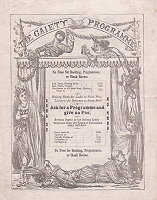 |
An Old Score A three act drama which opened at the Gaiety Theatre on 26th July 1869. This copy of the programme includes reviews dated 27th to 29th July. The Gilbert piece was the new two-hour-long curtain raiser to Columbus!, or the Original Pitch in a Merry Key, by Alfred Thompson, which had opened on May 17th. The piece closed on 20th August to allow for a revival of Robert the Devil and had therefore been seen only around 24 times. |
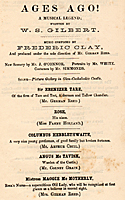 |
Ages Ago The second of Gilbert's German-Reed pieces, Ages Ago was produced at the Royal Gallery of Illustration on 22nd November 1869. With music by Frederic Clay, it is possibly best remembered today for introducing the idea of characters stepping from picture frames, which Gilbert used again in Ruddigore. A huge success, it played (although not in a continuous run, and latterly in an abridged form), until January 1871, chalking up 360 performances. |
| 1870 |
|
The Princess Another piece which Gilbert would recycle, The Princess was itself parody of Tennyson's poem of the same name. Produced at the Olympic Theatre on 8th January 1870, it ran until 14th April, a run of around 82 performances. The piece would later be reworked as Princess Ida. |
|
The Gentleman in Black With music by Frederic Clay, this two-act "musical legend" was more drama than musical, having only three solo songs during its 90 minute duration. It opened on 26th May 1870 at the Charing Cross Theatre, and ran for just 26 performances before the theatre closed at the end of the season on 24th June. |
|
Our Island Home Another one-act German Reed piece with music by the impressario (after Sullivan had refused an invitation to write the score), Our Island Home opened at the Royal Gallery of Illustration on 20th June 1870. The members of the company played themselves, stranded on an island, and threatened by Captain Bang, an attacker who had been apprenticed as a pirate in error - a theme which Gilbert would explore further in The Pirates of Penzance. It was with withdrawn on 13th August. |
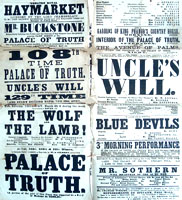 |
The Palace of Truth The first of Gilbert's fairy plays, The Palace of Truth opened 19th November 1870 at the Theatre Royal, Haymarket. This poster for March 23rd is for the 108th performance, and states that the piece would close on 29th April. In fact, the piece closed a day earlier, having given 140 performances, (not 230 as has been stated). John Baldwin Buckstone starred as King Phanor. |
| 1871 |
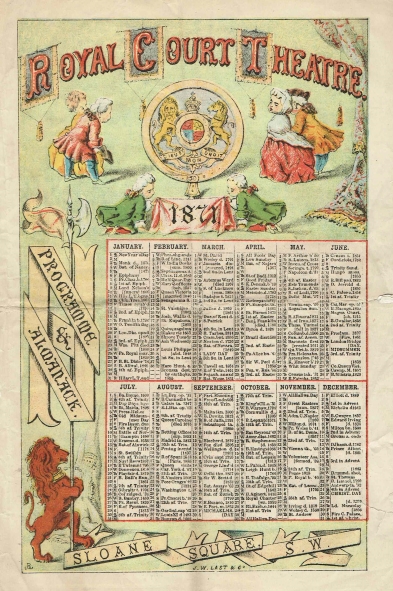 |
Randall's Thumb Randall's Thumb, a comedy, opened on 25th January 1871, and closed on 27th May after about 123 performances. Gibert's play was the first production at the newly named (and redesigned) Royal Court Theatre and this souvenir programme includes a useful 1871 Almanack, suggesting that it was probably produced fairly early in the year. Edward Righton, as Joe Bangle, made his first London appearance in the piece. |
|
A Sensation Novel Another piece for the German-Reeds, A Sensation Novel (possibly also titled A Sensational Novel for part of its run), opened at the Royal Gallery of Illustration on 30 January 1871. It appeared with a play, Baden Baden, and was with withdrawn on 12th August after 186 performances. |
|
Creatures of Impulse Creatures of Impulse, another fairy play, with music by Alberto (or Albert) Randegger, opened at the Royal Court Theatre on 2nd April 1871, initially as curtain raiser to Randall's Thumb. However, it soon proved more popular than the straight play, and was moved to the second place on the bill. It closed 29th July after 91 perfs. |
|
Great Expectations Great Expectations, not surprisingly an adaptation of Dickens' novel, also premiered at the Royal Court Theatre, on 29th May 1871, replacing Randall's Thumb, and sharing the bill with Creatures of Impulse as well as its closing night. It had been seen around 48 times. |
 |
Robert the Devil Robert the Devil was revived at the Gaiety Theatre many times. This programme dates from June 1871, when the piece followed a "new" arrangement of Balfe's, Letty, the Basket Maker. |
|
On Guard On Guard premiered at the Court Theatre on 28th October 1871 and closed on 18th November, a run of only around 19 performances. |
 |
Pygmalion and Galatea Pygmalion and Galatea, which would prove to be one of the most often revived straight plays by Gilbert, first appeared at the Theatre Royal, Haymarket on 9th December 1871.This programme is for the 40th performance, on January 25th 1872; Mr Kendal and Miss Robertson in the title roles. The play was preceded by a Buckstone farce, The Irish Lion, and followed by Charles Mathhews' farce, Uncle Foozle. Gilbert's play closed on 12th July 1872 after a long run for the period of around 184 performances. |
 |
Thespis Thespis, or The Gods Grown Old, the first Gilbert & Sullivan collaboration opened at the Gaiety Theatre on 26th December 1871. This early example of the programme was printed sometime before Jan 13th. The companion piece, Dearer Than Life, was replaced by Ganymede & Galatea and Off the Line on 20th January, and by Paul Pry on 26th February. Thespis closed on 8th March 1872 and was given just one revival, at Mdlle. Clary's benefit on 28th April 1872. |
| 1872 |
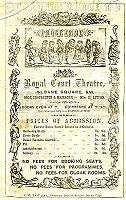 |
Creatures of Impulse Edward Righton recreated his role of the miser Boomblehardt in this Royal Court revival of Creatures of Impulse, although most of the cast is different from that seen at the premiere. Interestingly, it was still described as a "New Fairy Tale", where is fact it was simply a shortened version of Gilbert's 1871 piece. It opened 19th October 1872, having been rushed into the theatre to fill a gap created by an burlesque of Zampa which had closed prematurely, and ran until 13th November, a run of around 22 performances. The announcement in The Times on opening night boasted "new music, new songs, new scenery". |
|
A Medical Man This one-act farce had been published in 1870, yet it appears that its first public appearance was on 24th October 1872 at St. George's Hall, probably produced at a single charity benefit. The piece was apparently not seen again until a production in Birmingham in 1895. |
|
Happy Arcadia Happy Arcadia, another German-Reed piece, with music by Frederic Clay, opened at the Royal Gallery of Illustration on 28th October 1872. It was withdrawn on 2nd or 3rd May 1873, shortly before the venue closed its doors on 31st July. |
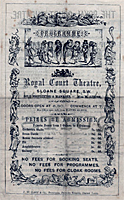 |
Quits An Old Score, Gilbert's 1869 three-act drama, was revived 11th Nov. 1872, at Court Theatre under a new title, Quits. This time it ran a little longer, with around 46 performances, closing on 3rd January 1872. |
| 1873 |
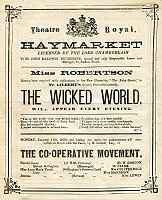 |
The Wicked World Another of Gilbert's fairy plays, The Wicked World premiered at the Theatre Royal, Haymarket on 4th January 1873. By 17th January, when this programme was issued, it was already being billed as a "successful comedy". It did indeed have a long run for the period, giving its final, 145th performance, on 21st June 1873. |
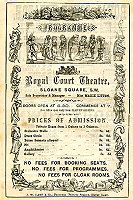 |
The Happy Land Written under a pseudonym, F. Tomline, with Punch writer Gilbert A'Beckett, W.S. Gilbert burlesqued his own play, The Wicked World, in his satrirical piece, The Happy Land, which opened at the Royal Court Theatre on March 3rd 1873. This programme dates from some time after March 6th, when the names of the "mortals" were changed, in order to disguise the portrayal of Gladstone and other leading politicians. In an interesting note in the programme, Gilbert has given permission to his alter ego to pastiche his own work ! It ran for 142 performances, closing on 9th August 1873. During the run the cast also gave a single matinee performance on 28th June at Queen's Theatre. |
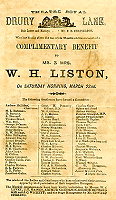 |
The Wicked World One scene from The Wicked World was among the pieces performed at the Theatre Royal, Drury Lane on March 22nd 1873 for the benefit of Mr and Mrs W. H. Liston. Gilbert sat on the steering committee for the event, and among other items on the bill Henry Irving appeared in a scene from Charles I. |
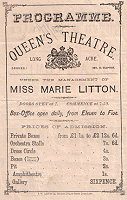 |
Creatures of Impulse Gilbert's Creatures of Impulse was revived again in 1873 at Queen's Theatre, for just seven performances between 5th and 12th July 1873. Part of a triple bill with Vesta's Temple and Jerrold's Black-Ey'd Susan, the Gilbert play still featured Edward Righton in his original role as Boomblehardt. The back page has an advert for the Royal Court, where Gilbert's The Happy Land was still playing. |
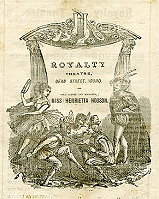 |
The Realms of Joy The Realms of Joy by Gilbert (but written under the pseudonym of F. Latour Tomline) opened at the Royalty Theatre on 28th October 1873. The play was a "free and easy version of the highly successful Palais Royal Frace, Le Roi Candaule". It has been said that the title was changed from The Realm of Joy during the run, yet the management's adverts in The Times referred to the piece in the plural right from the opening night. It chalked up about 113 performances, closing on 27th February 1873. |
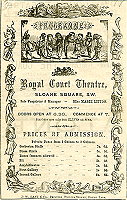 |
The Wedding March After a short postponement,
Gilbert's play The Wedding March, also written under his pseudonym,
F. Latour Tomline, opened at the Royal Court Theatre on November
15th 1873, and settled in for a good run. This programme is from
about a month after the opening night, as it is dated 18th December,
but the play ran until 3rd March 1874. The piece was adapted from Labiche's
Un Chapeau de Paille d'Italie, and was probably seen around 92
times. |
| 1874 |
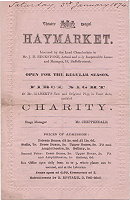 |
Charity Charity opened at the Theatre Royal, Haymarket on 3rd January 1874. This opening night programme clearly states "First Night" on the cover, and is fully dated inside. The four-act Gilbert play shared the bill with a Farney/Legouix operetta, Crimson Scarf and the revival of Raymond and Agnes, a two-act melodrama. It ran for around 61 nights, closing on 14th March 1874. |
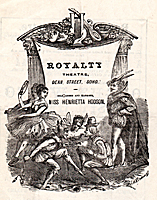 |
Ought We to Visit Her? Ought We to Visit Her? was a three-act drama, adapted from a novel by Mrs. Annie Edwardes, who is credited in the programme as co-author. It opened at the Royalty Theatre on 17th January 1874 and this first night programme shows that it ran concurrently with The Realms of Joy, at least for a period - a Gilbert double bill, although one play was written under a pseudonym. Charles Wyndham appeared in both plays - Henrietta Hodson, who famously clashed with Gilbert soon afterwards, only in the newer piece. Ought We to Visit Her? closed on 14th April after about 59 performances. |
|
Committed for Trial Committed for Trial was Gilbert's transaltion of Le Réveillon, a two-act farce by Henri Meilhac and Ludovic Halevy. It opened at the Globe Theatre on 24th January 1874 and closed after around 55 performances on 28th March. |
|
The Blue-Legged Lady W.J. Hill was named (by Clarence*) as author of The Blue-Legged Lady, a one-act farcical curtain-raiser which first appeared at the Royal Court Theatre on 4 March 1874. The piece, described in The Times advert as "a piece of absurdity", was apparently translated by Gilbert from La Dame aux Jambes d'Azur by Eugene Labiche and Marc-Michel. It ran for just a month, closing on 4th April after about 27 performances. |
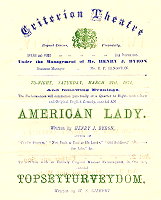 |
Topsyturveydom Topsyturveydom, an extravaganza in two scenes, with music by Alfred Cellier, opened at the Criterion Theatre on 21st March 1874, playing with An American Lady. Ganzl* suggests it was withdrawn on 10th April, but The Times listings clearly show that the last performance, probably the 25th, was given on 17th April. Despite having a title which hints at one of his most prominent creative styles, Topsyturveydom was obviously not one of Gilbert's hits. (NB: There are many variant spellings of the title, at least two of them apparently sanctioned by Gilbert, involving one or two e's and possibly a hyphen!.) |
|
Creatures of Impulse An altered version of Creatures of Impulse opened at the Vaudeville Theatre on 4th July 1874, and ran until 30th October, playing with Old Heads and Young Hearts and My Husband's Secret for around 102 performances. |
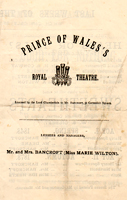 |
Sweethearts A charming two-act comedy about missed opportunities, Sweethearts opened at the Prince of Wales's Theatre on 7th November 1874. The following year Gilbert condensed the plot into a song by the same name, which was published with music by Sullivan: one of the three stand-alone songs written by G&S. Hugely popular, the play ran until 13th April 1875, chalking up around 132 performances. |
| 1875 |
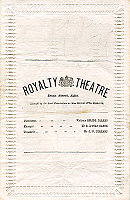 |
Trial by Jury Trial By Jury opened at the Royalty Theatre on 25th March 1875, playing as an afterpiece to Offenbach's La Perichole. The true initial run was rather short, as the theatre closed on June 12th to allow the company to tour the provinces for four months. Although probably issued on 10th April 1875, it is possible that this programme was printed even earlier, as it does not mention the Associate, a role which is generally believed to have been named after 1st April. All the original cast members were in place at this exceptionally early date. |
|
Tom Cobb Tom Cobb or, Fortune's Toy, a farce in three acts, opened at St. James's Theatre on 24th April 1875. Although well received by the critics, it ran for just 53 performances. |
|
Eyes and No Eyes Eyes and No Eyes or, The Art of Seeing was Gilbert's final collaboration with German Reed. With music composed by the producer, it opened at his new venue, St. George's Hall, on 5th July 1875 and was withdrawn 14th August. It played again from 4th to 30th October 1875. |
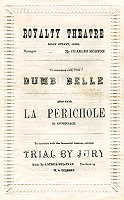 |
Trial by Jury Following their tour, the Trial By Jury company re-opened at the Royalty Theatre on 11th October 1875, again playing with La Perichole. By the date of this programme, 16th November, there had been some substantial cast changes and the piece was now described as "successful". The operetta was withdrawn on 18th December, having totalled an initial, if fractured, run of 131 performances. |
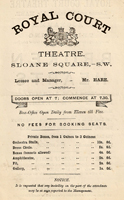 |
Broken Hearts A drama in three-acts which opened at the Royal Court Theatre on 9th December 1875. W.H. Kendal played Prince Florian, with his wife, Madge Robertson as Lady Hilda. In the piece this actress sang the song "Let me stay", composed by Walter Maynard. The play ran three months, closing on 10th March after around 79 performances. |
| 1876 |
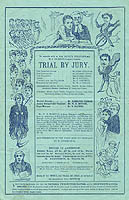 |
Trial by Jury On January 13th 1876 the Royalty production of Trial by Jury moved to the Opera Comique, where it was initially an afterpiece to Offenbach's Madame L'Archiduc. This Opera Comique programme, dated 14th February 1876, features the composer's brother Fred Sullivan in his original role as the Judge. Counsel, Usher and Foreman were all played by actors who had appeared at the Royalty. Gilbert and Sullivan appear on the cover and the programme is full of line drawings of characters from both pieces. |
|
Princess Toto This three-act comic opera opened out of town, at the Theatre Royal in Nottingham, on 26th June 1876. With music by Frederic Clay, the piece toured the provinces until 9th September 1875. |
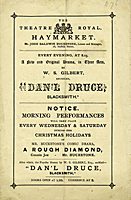 |
Dan'l Druce, Blacksmith Dan'l Druce, Blacksmith was first produced at the Theatre Royal, Haymarket. The three-act drama opened on 11th September 1876. Herman Vezin played the title role. After around 100 performances the play was withdrawn on 19th January 1877, to be replaced by a revival of Pygmalion & Galatea which opened the following night. |
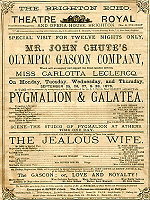 |
Pygmalion & Galatea Gilbert's 1871 play Pygmalion & Galatea was seen at Brighton's Theatre Royal on 25th September 1876, performed by John Chute's Olympic Gaston company, and starring John Nelson and Carlotta Leclercq. |
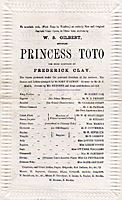 |
Princess Toto - first night in London Princess Toto finally reached London on 2nd October 1876, running for just 48 performances at the Strand Theatre despite, or perhaps because of, some radical recasting. By a strange coincidence, the piece to take its place at the Strand immediately after its 25th November closing performance was Dan'l Tra-Duced, Tinker, a burlesque of Gilbert's play still running in the Haymarket. |
| 1877 |
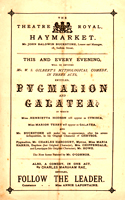 |
Pygmalion & Galatea Pygmalion & Galatea was revived at the Theatre Royal, Haymarket on January 20th 1877, sharing the bill with Birds In Their Little Nests Agree, and Follow the Leader, two plays by Charles Marsham Rae. The Gilbert play ran until 6th April, though the theatre was closed for the whole of Easter week, giving a run length of approximately 60 performances. An additional performance, for one-night-only, was given on 20th April. |
|
On Bail A farce in three acts, adapted from Le Réveillon, which opened at the Criterion Theatre on 3rd February 1877. The piece closed after around 34 performances on 14th March. |
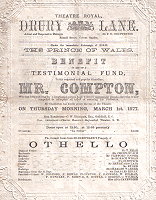 |
Trial by Jury Trial By Jury was the highlight of Mr. Compton's benefit at Drury Lane on March 1st 1877. George Honey was Judge, leading a distinguished cast which included George Grossmith as a juryman, making what was probably his first appearance in a Gilbert and Sullivan opera, almost nine months before the opening of The Sorcerer. Sullivan conducted the orchestra, but no actor is credited with the role of Associate, leaving open the possibility that this was Gilbert, which would make this one of the very rare occasions when G&S appeared together in public. |
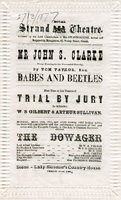 |
Trial by Jury The first true revival of Trial By Jury was on March 3rd 1877 at the Strand Theatre, as afterpiece to Tom Taylor's Babes and Beetles and Charles Matthews' The Dowager. After the first two weeks George Leith took over the role of Judge from J.G. Taylor, but otherwise the cast remained the same for the whole of the run. This programme is dated for 27th March 1877. |
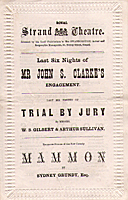 |
Trial by Jury This programme for the last week of performances of Trial By Jury at the Strand Theatre shows that it was, towards the end of the 73 performance run, afterpiece to Sidney Grundy's Mammon and the comic drama Toodles. The run ended on 26th May 1877. |
| Great Expectations Gilbert's 1871 adaptation of Dickens' Great Expectations was revived with "new scenery" at the Royal Aquarium Theatre on 17th March 1877. The piece ran for exactly a month, closing on 17th April after around 30 performances. |
| The Palace of Truth In 1877 The Palace of Truth was revived at the Theatre Royal, Haymarket, where it had had its premiere performance in 1870. The revival opened on 21st April 1877 and closed on 26th May after around 34 performances. |
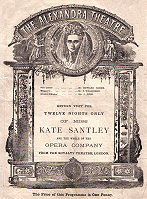 |
Princess Toto Following its disastrous reception in London Princess Toto set out on tour again, reaching Liverpool for the second time on August 6th 1877. W.H. Seymour, who would be D'Oyly Carte's stage manager for twenty years from 1881, played Zapeter at the Alexandra Theatre and was joined in the cast by other key members of the Royalty Theatre company, including Amy Clifford who had appeared as First Bridesmaid in the first run of Trial by Jury. |
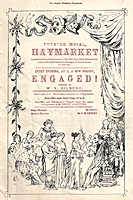 |
Engaged - first performance A farcical comedy in three acts, Engaged opened on 3rd October 1877 at the Theatre Royal, Haymarket. Dated in code for opening night, this programme has an allegorical scene on the cover, showing Shakespeare presented with an olive branch. Companion pieces were By The Sea and My Precious Betsy. |
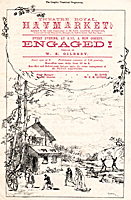 |
Engaged Engaged ran for 110 performances, closing on 1st February 1878. This programme, produced later in the run by the Graphic Company, has a scene on the cover by Pilotell, and a series of vignettes of the cast inside. |
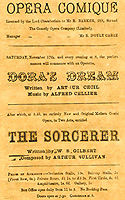 |
The Sorcerer The Sorcerer opened at the Opera Comique on 22nd November 1877, and it appears that no special programme was produced for opening night. However, this copy was issued during the first two weeks of the production, as it gives Act 2 as "Market Place in the Village", and has typographical errors consistent with the example reproduced by Reginald Allen, and which he considers likely to have been the first issued. The opera, with music by Sullivan, closed on 24th May 1878 after 175 performances. |
| 1878 |
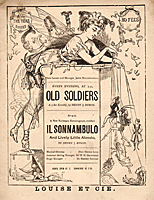 |
The Forty Thieves Also known as Ali Baba and The Forty Thieves, this pantomime/burlesque was written by Gilbert with Robert Reece, H. J. Byron, and F. C. Burnand - only the second scene, set in The Wood, was by Gilbert. It was first performed, with Gilbert himself as a "grimly earnest and determined" Harlequin, at a benefit at the Gaiety Theatre on 13th February 1878. The piece was seen in Brighton on 9th March, although whether Gilbert appeared at the provincial production is not clear. He was certainly back in the cast for a second Gaiety benefit, shown here, for the Eurydice Fund on 10th April 1878. With the exception of three professional actresses, the entire cast was formed of amateurs. The play does not seem to have been presented thereafter. |
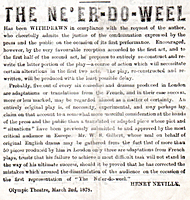 |
The Ne'er-do-weel The Ne'er-do-weel, a three-act comedy, opened at the Olympic Theatre on 25th February 1878. It lasted just six performances, and according to this notice written by actor/manager Henry Neville in the following week's programme was withdrawn at WSG's own request. Apparently the latter part of the second act had been heavily critisised, and the author wished for a chance to "correct the mistakes which aroused the dissatisfaction of the audience"... |
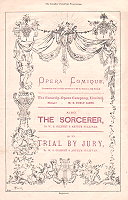 |
Trial by Jury On 23rd March 1878 Trial by Jury was added as afterpiece to The Sorcerer at the Opera Comique, running alongside it for 56 performances. This programme, dated 29th April, used the same format as the Pinafore first night one would, less than a month later. |
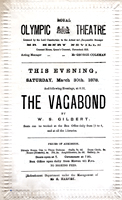 |
The Vagabond After three weeks The Ne'er-do-weel was indeed rewritten and restaged. It reopened at the Olympic on 25th March 1878, retitled The Vagabond, but struggled on for just another 23 performances or so, finally closing on April 18th. This programme is dated for 30th March. |
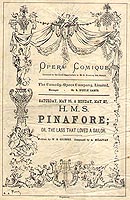 |
H.M.S. Pinafore H.M.S. Pinafore, or The Lass That Loved a Sailor opened at the Opera Comique on May 25th 1878. This programme was intended for use on just the first and second nights and it bears both dates. Only five hundred were printed, and of these just a handful are known to have survived. After 571 performances the piece closed on February 20th 1880. |
| 1879 |
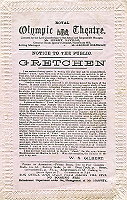 |
Gretchen One of the biggest flops of Gilbert's career, Gretchen, a play "suggested by the leading incidents in Goethe's Faust", opened at the Royal Olympic Theatre on March 24th 1879. It closed on April 12th, after around only 18 performances. The cover of the programme carries a virtual essay by Gilbert anxious to explain to the audience that he was not attempting to put Faust on stage in its entirety, but simply to "re-model ... the story of Gretchen's downfall". |
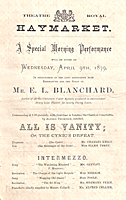 |
Gilbert on stage A daytime charity benefit for E.L. Blanchard, author of the Drury Lane pantomimes for many decades, held at the Theatre Royal Haymarket on April 9th 1879 featured many great names of Victorian theatre. The performance of Lytton's comedy, Money, featured Gilbert among a cast of club members that also included F. C. Burnand, J.R. Planché and H. J. Byron, and Rutland Barrington took time out from Pinafore to play Toke. Earlier in the day Ellen Terry appeared in All is Vanity and Alfred Cellier entertained at the piano. |
|
Lord Mayor's Day Gilbert did the translation for two of the three acts of this Folly Theatre farce. Based on La Cagnotte by Eugene Labiche, no English author was named when the piece opened in London on 30th June 1879 (not 1st July as given in some sources). It ran for only around 12 performances before closing on 12th July. |
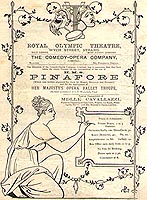 |
H.M.S. Pinafore On August 1st 1879 a rival production of Pinafore opened at the Imperial Theatre (Royal Aquarium), produced by the Comedy-Opera Company. After a month the piece transferred to the Olympic Theatre, where it ran from September 8th to October 25th, totalling 91 performances in the two venues. On this Olympic cover, the production company claim that the piece was written "expressly for them by Messrs. Sullivan and Gilbert" ! |
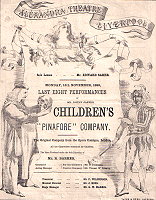 |
The Children's Pinafore The Children's Pinafore opened at the Opera Comique on Dec 16th 1879, playing 78 matinees over the Christmas season. On August 2nd 1880 this company set out on tour.The cast named in this November 1880 programme from Liverpool was as had been seen in London, except that Hebe was Alice Roe and Bob Beckett was played by Master R. Presano. The Children's Pinafore played a second Christmas season of 28 matinees at the Opera Comique between Dec 22nd 1880 on January 28th (or Feb 11th ?) 1881. Following this the company set out on tour again, until July 2nd. |
| 1880 |
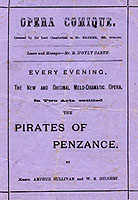 |
The Pirates of Penzance The Pirates of Penzance, or The Slave of Duty was first seen in London at the Opera Comique on April 3rd 1880, where it ran for 363 performances, closing on April 2nd of the following year. The official premiere had been in New York on 31st December 1879, although one day earlier the piece (or a close approxiomation) had played at the Bijou Theatre in Paignton in order to secure the British copyright. |
| 1881 |
|
Princess Toto Princess Toto was revised, and revived, at the Opera Comique on 15th October 1881. This time it ran for 65 performances, closing December 17th. |
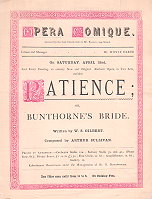 |
Patience Patience, or Bunthorne's Bride opened at the Opera Comique on April 23rd 1881, where it played for 170 performances before closing on October 8th, ready to reopen immediately at the new Savoy. This first night programme has a distinctive red border on the cover. |
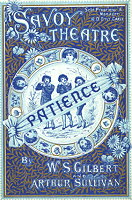 |
Patience Patience transferred to the new Savoy Theatre on 10th October 1881 where it ran for a further 408 performances, closing on November 22nd 1882 after a total run of 578 performances.
|
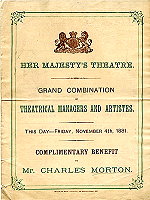 |
Patience On Friday November 4th 1881 Her Majesty's Theatre was host to a benefit for Charles Morton by a "grand combination of theatrical managers and artistes". Cellier conducted Leonora Braham and Rutland Barrington in a scene and duet from Patience. The rest of the bill was a mix of serious and light-hearted pieces and musical hall turns. |
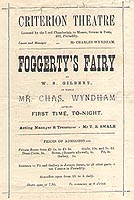 |
Foggerty's Fairy W.S. Gilbert's, Foggerty's Fairy, was a play ahead of its time, and though well received by some critics at its December 15th 1881 opening at the Criterion Theatre, it closed on Jan 6th 1882 after about 25 performances. Gilbert took a curtain call on the opening night, when this programme was issued. |
| 1882 |
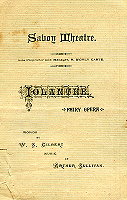 |
Iolanthe Iolanthe, or The Peer and the Peri was the first piece to have its premiere at the Savoy Theatre, opening on 25th November 1882. This opening night programme states the date inside, and also notes that "on this occasion the opera will be Conducted by the Composer". This cheap-seats version is printed on an odd ribbed paper of pale green. The opera closed on Jan 1st 1884, after a run of 398 performances. |
| 1884 |
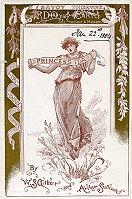 |
Princess Ida Princess Ida, or Castle Adamant opened on 5th January 1884, and closed on October 9th, after a disappointing run (for a G&S opera) of just 246 performances. This early programme, dated 22nd Jan 1884, describes the opera as being "in a prologue and two acts". Later, the piece was simply in "three acts". |
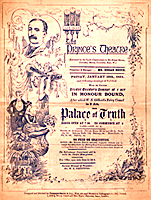 |
The Palace of Truth Gilbert's 1870 play The Palace of Truth had probably not been seen in London since 1877, yet was chosen as the piece to open the new Prince's Theatre in Coventry Street. Opening on 18th January 1884 this revival played forty-three performances, including four matinees before closing on 1st March. George Temple, who had created the role of Samuel in Pirates played Zoram, and Herbert Beerbohm Tree was Chrysal. Although not renamed "The Prince of Wales Theatre" until 1886 it is clear from the feathers on the cover that intention was always that the building should have been named for the future Edward Vll. |
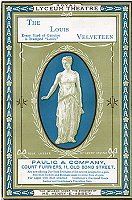 |
Comedy & Tragedy/ Pygmalion & Galatea Gilbert's 1871 play Pygmalion & Galatea was revived at the Royal Lyceum Theatre on December 8th 1883, with Mary Anderson making her British debut as Galatea. On January 26th 1884 a new Gilbert afterpiece, Comedy & Tragedy, was added to the bill. The double bill closed temporarily on 5th April, allowing Anderson to tour the British Isles, before returning again to the Lyceum. She appears on the cover of this lavish souvenir programme, dressed as the statue Galatea. It is dated September 6th 1884, the first night of the second part of the Lyceum run. The plays finally closed on 25th October, after Pygmalion & Galatea had been seen 152 times during the fractured run, with Comedy & Tragedy having given around 121 performances. |
 |
Dan'l
Druce,
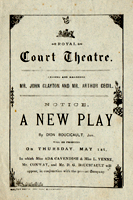
Blacksmith Dan'l Druce, Blacksmith was revived at the Court Theatre in 1884. Opening on 8th March the revival ran for 50 or so performances, closing on 30th April. The Gilbert play shared the bill with the first production of Cox & Box at the Court Theatre for four nights between 15th and 18th April. |
 |
Princess
Ida
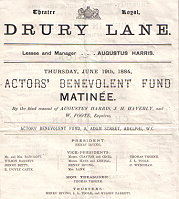
Selected as the finale of the annual Actors Benevolent Fund Matinee, at Drury Lane on June 19th 1884, was a selection from Princess Ida, featuring Durward Lely, Charles Ryley and Henry Bracy. Also on the bill that afternoon were, among many others, Henry Irving, Ellen Terry, and Kate Vaughan. Madame Patey and Mr Santley also sang, and it is maybe not entirely coincidental that Richard D'Oyly Carte is named on the cover as Vice-President of the charity ! |
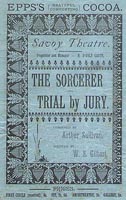 |
The Sorcerer / Trial by Jury D'Oyly Carte had no original opera to put into the Savoy following the relative failure of Princess Ida. The Sorcerer was therefore given a new act 2 opening, and paired with Trial by Jury for the opening night of the first DOC revival on October 11th 1884. As stated in this programme, Sullivan conducted the first performance. The two pieces ran together for 150 performances, until March 12th 1885. |
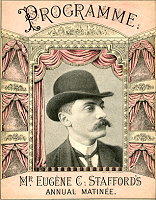 |
The Wedding March Gilbert's 1873 play, The Wedding March was perhaps a strange choice for Eugene C. Stafford's Annual Matinee at the Gaiety Theatre on 4th December 1884, with a cast headed by Lionel Brough and Lydia Thompson. The programme is exceptional, with a portrait of Stafford on the cover, surrounded by a view of the Gaiety proscenium arch, while inside is a view from the stage, with seats and boxes numbered. It seems likely that the chap was employed at the venue, possibly in the box office. |
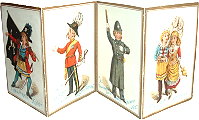 |
Children's Pirates of Penzance From Dec 26th 1884 until Feb 14th 1885, a company of children performed a series of matinees of The Pirates of Penzance at the Savoy. This four-sided foldout souvenir programme depicting the child actors on one side and full details of cast etc on the back was among the most elaborate and expensive ever produced by D'Oyly Carte. |
| 1885 |
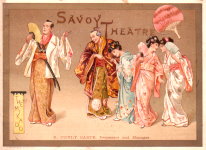 |
The Mikado The Mikado, or The Town of Titipu opened at the Savoy on March 14th 1885 and didn't close until Jan 19th 1887, following a 672 performance run. This souvenir programme is among the lavish ever produced by D'Oyly Carte. The cover design was used for many years. |
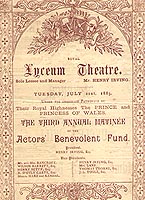 |
Patience Although The Mikado was still running, the D'Oyly Carte stars Grossmith, Barrington, Braham & Brandram chose to present a scene from Patience at the Lyceum Theatre at 3pm on July 21st 1885 as part of a benefit performance for the Actors' Benevolent Fund. The conductor of the segment was F. Cellier. Mr. J.L. Toole (of Thespis) also appeared, as did Sarah Bernhardt, Henry Irving and Ellen Terry. |
| 1887 |
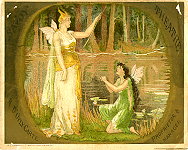 |
Ruddygore Ruddygore, or The Witch's Curse opened at the Savoy on January 22nd 1887. This opening night programme states the date inside, and also notes that "on this occasion the opera will be conducted by the composer". On, or around, 2nd February 1887, the spelling was changed to Ruddigore, for reasons of decency, and thus revised it ran a total of 288 performances, closing on November 5th 1887. |
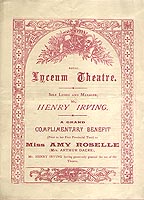 |
Trial by Jury A Lyceum benefit, this one for Amy Roselle on 16th June 1887. George Grossmith performed a "sketch", and Irving and Terry appeared in a scene from The Merchant of Venice. The afternoon concluded with Trial by Jury; lead roles taken by Rutland Barrington, Richard Temple, Rudolph Lewis, Geraldine Ulmar and Henry Bracy. Leading theatrical personalities of the day appeared in Court. |
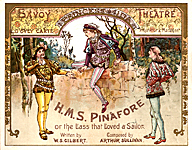 |
H.M. S. Pinafore On November 12th 1887, following the early close of Ruddigore, Richard D'Oyly Carte was forced, once again, to mount a revival at the Savoy. Pinafore was given a run of 120 performances, closing on 10th March 1888. This is an example of the first night programme. |
| 1888 |
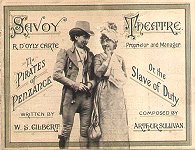 |
The Pirates of Penzance The Pirates of Penzance was given its first revival on March 17th 1888. It closed on 6th June, after just 80 performances - one of the shortest runs in the nineteenth century for a G&S opera. This example of the souvenir programme is dated 26th March 1888. The forepiece was Mrs. Jarramie's Genie. |
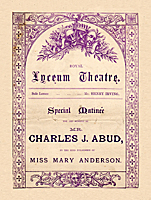 |
Pygmalion & Galatea On the afternoon of Wed March 21st 1888, Gilbert's Pygmalion & Galatea was again presented at the Lyceum Theatre, this time for a single performance in the season. The play was produced "by the kind permission" of Mary Anderson, who appeared as Galatea, for the benefit of Mr Charles J. Abud. F. H. Macklin played the other title role and Rutland Barrington, on loan from the Savoy where he was appearing in the first revival of The Pirates of Penzance, was Chrysos. |
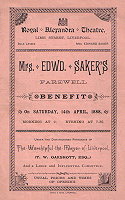 |
Pygmalion & Galatea On Saturday 14th April 1888 the Royal Alexandra Theatre in Liverpool hosted a pair of farewell benefits for the wife of the lessee, Mrs Edward Saker. In the evening Gilbert's Pygmalion & Galatea was produced, "under the direction and personal superintendence of the author". Assuming that Gilbert was in Liverpool for the actual event he was almost certainly cajoled into being one of the "literary, dramatic and local celebrities" who formed the jury for the Bardell v Pickwick trial scene which formed part of the matinee performance. |
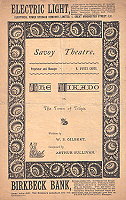 |
The Mikado During the 116 performance run of the first Mikado revival there were a number of cast changes. This programme has Richard Temple in the title role, Geraldine Ulmar as Yum-Yum, Annie Cole as Pitti-Sing and Brandram, Grossmith and Barrington recreating their original parts. The curtain raiser was Mrs Jarramie's Genie. The revival opened at the Savoy on June 7th 1888 and ran until September 29th. |
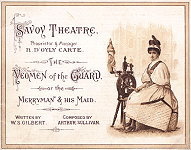 |
The Yeomen of the Guard The Yeomen of the Guard, or The Merryman and his Maid opened at the Savoy on October 3rd 1888, and ran for 423 performances, closing on November 30th 1889. This attractive souvenir, with Jessie Bond as Phoebe on the cover, was used in the middle of the run. |
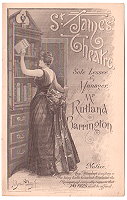 |
Brantinghame Hall Brantinghame Hall was the second play to appear at the St James's Theatre under the management of Rutland Barrington, previously the creator of many lead roles in G&S operas. Sadly Gilbert's four-act drama was not a success. It opened on November 29th 1888 and closed on 29th December, after only around 27 performances, sending Barrington into bankruptcy. As a gesture of support Gilbert refused to claim his authorship fees. |
| 1889 |
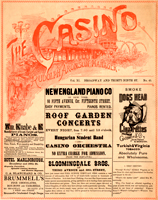 |
The Brigands Gilbert attempted to stop an 1889 production of his translation for Offenbach's "Les Brigands", claiming that his libretto, published in 1871, was only ever intended to be read, never performed. He failed, and it was first seen at the Casino Theatre in New York on 9th May 1889, starring Lillian Russell as Fiorella. |
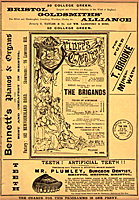 |
The Brigands Gilbert again protested when a production was mounted by Van Biene and Horace Lingard's Opera Company in the UK shortly after the American run. After trying out in Portsmouth on 2nd September, and at Prince's Theatre Bristol on the 9th, the piece settled into the Avenue Theatre in London on 16th September, where it ran for just 26 nights, closing on 12th October. Lingard then toured the operetta around the British provinces, with some success. In England Fiorella was played by Agnes Dellaporte. |
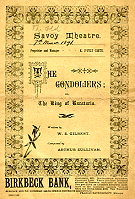 |
The
Gondoliers
The Gondoliers, or The King of Barataria opened at the Savoy on December 7th 1889, and closed on June 20th 1891 after 554 performances. |
| 1890 |
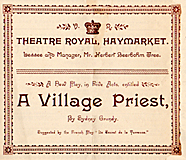 |
Comedy & Tragedy Gilbert's 1884 one-act play Comedy & Tragedy, re-appeared in the West End on the afternoon of 7th May 1890 at the Haymarket Theatre, as afterpiece to Sydney Grundy's A Village Priest. The same cast, headed by Fred Terry and Julia Neilson, then played at a second matinee a week later and finally a fractured run between May 31st and 24th November, totalling 68 performances. |
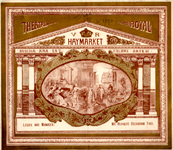 |
Comedy & Tragedy This is the rather more elaborate programme for the same production, probably issued to those in better seats. |
| 1891 |
 |
The
Gondoliers by
Royal Command
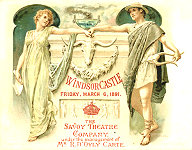
This souvenir was produced for one of the most important events in D'Oyly Carte history, when The Gondoliers was presented in front of Queen Victoria at Windsor Castle on March 6th 1891. Very few can have been printed, and even fewer survive. Contrary to legend, the programme does name Gilbert as the author. |
| Rosencrantz
and Guildenstern
A burlesque "in three short tableaux", Rosencrantz and Guildenstern first appeared at a benefit matinee at the Vaudeville Theatre on 3rd June 1891. |
 |
The
Mikado by Royal Command
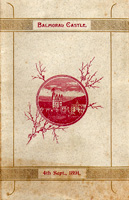
Following the success of The Gondoliers at Windsor Castle in March, Queen Victoria commanded a further Royal Performance of G&S. D'Oyly Carte's "C" Company was playing Mikado, Yeomen and Gondoliers at Her Majesty's Theatre in Aberdeen when the cast made a special trip to the Queen's castle at Balmoral, where The Mikado was presented on Friday 4th September. This small cardboard programme was probably issued to members of the Royal Household. |
 |
The
Mikado by Royal Command
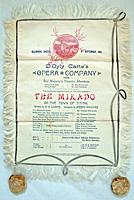
This large souvenir, printed on cream silk, was probably presented only to the Royal Family and special guests. Interestingly, both the two examples known to have survived have extra loops of silver braiding on only the right and lower edges, and only this one has retained the two gold silk pom-poms which hang from the bottom edge. Both this and the card programme shown above feature the same view of Balmoral Castle, printed in red. |
| 1892 |
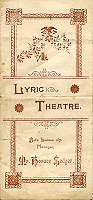 |
The Mountebanks - OPENING NIGHT Gilbert's opera The Mountebanks opened at the Lyric Theatre on 4th January 1892, and ran until August. The composer, Alfred Cellier, died, aged 47, eight days before opening night, and his work was completed by Ivan Caryll. The cast included the latter's wife, Geraldine Ulmar, and Frank Wyatt, who had both created roles in The Gondoliers. Marie Studholme, a future star, appeared in the chorus. The Mountebanks closed on 5th August, after 221 performances. This first night programme is dated for 4th January, when no forepiece was performed. |
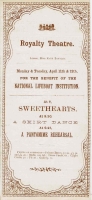 |
Sweethearts The only West End appearance of Sweethearts in the 1890s was a two night run at the Royaly, on 11 and 12 April 1892. At this charity benefit in aid of the National Lifeboat Institution Harry was played by Arthur Styan and Jenny by Mrs Phillips. Also on the bill were Cecil Clay's A Pantomime Rehearsal and A Skirt Dance. |
 |
Rosencrantz
and Guildenstern
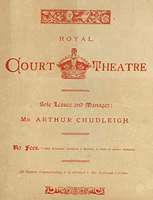
Having previously only appeared at a charity benefit in 1891, Rosencrantz and Guildenstern acheived a run at the Royal Court, opening 27th April 1892 and closing after 77 performances on 15th July. The cast included Decima Moore, who had created the role of Gianetta in The Gondoliers. |
 |
Haste to the Wedding With music by the multi-talented George Grossmith, creator of the patter roles in most of the Savoy operas, Haste to the Wedding was a comic-opera adaptation of Gilbert's own The Wedding March. It opened at the Criterion Theatre on 27th July 1892 and closed on 20th August after just 22 performances. The piece had marked the stage debut of Grossmith's son, George Junior, who would be a major musical comedy star of the next generation. |
| 1893 |
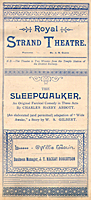 |
The Sleepwalker A real curiosity, The Sleepwalker was a play by Charles Harry Abbott, which opened at the Royal Strand Theatre on 25th July 1893. The piece was described as "an elaborated (and permitted) adaptation of "Wide Awake", a story by W. S. Gilbert", in which the central character is one Jack Pointer (the name probably an Abbott creation), played by Charles S. Fawcett. Harry Paulton was his college chum Rev. Hately Hylo, Willie Edouin was Major Blister, his uncle, and Seymour Hicks played John, one of his cousins. The play closed on 18th August, after just 26 performances. Gilbert's short story had first appeared in 1878. |
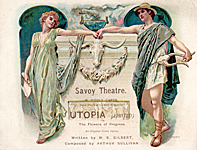 |
Utopia (Limited) Utopia (Limited), or The Flowers of Progress opened at the Savoy on 7th October 1893, running for 245 performances. This souvenir programme, issued to those in the better seats on the first night, notes that the composer would conduct. The brackets were removed from the title within a few weeks of the opening. |
| 1894 |
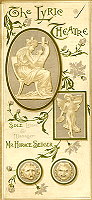 |
His Excellency His Excellency, by W.S. Gilbert and F. Osmond Carr, opened at the Lyric Theatre on 27th October 1894, running for just 161 performances. This first night programme, issued to those in better seats, has no advertisements inside. The cast included Rutland Barrington, George Grossmith, Jessie Bond, Alice Barnett and Nancy McIntosh. |
| 1895 |
|
Happy Arcadia Happy Arcadia, Gilbert's 1872 piece with music by Frederic Clay, was re-presented twice in 1895 at St Georges Hall, under the managenent of, and starring, Rutland Barrington, the former Savoyard. It ran from 15th July to 10th August, and from 4th to 30th November. |
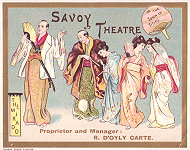 |
The
Mikado
The second revival of The Mikado, which opened at the Savoy on 6th Nov 1895. The production featured Rutland Barrington, Jessie Bond and Rosina Brandram in their original characters, and closed after 127 performances, on March 4th 1896. This programme is dated for 27th January. |
| 1896 |
 |
The
Grand Duke
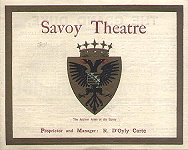
The Grand Duke, or The Statutory Duel, Gilbert & Sullivan's final collaboration, opened on March 7th 1896. The programme cover bears the Savoy crest. The piece ran for just 123 performances, closing on July 10th 1896. |
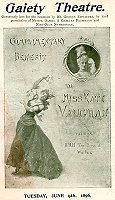 |
Trial by Jury Benefit for Kate Vaughan at the Gaiety Theatre, June 9th 1896. The bill included Trial by Jury, directed by Gilbert, who also played the Associate. Rutland Barrington was Judge; Florence St. John, the Plaintiff; Eric Lewis was Counsel and Charles Kenningham, the Defendant. W.S. Penley, then most famous for Charley's Aunt, played Foreman, a part he had taken at the Royalty Theatre in 1875 ! Among the bridesmaids and jury were many D'Oyly Carte "names", including: Florence Dysart, Walter Passmore, Edith Johnston, Emmie Owen, Florence Perry and J.J. Dallas. Francois Cellier conducted, and in the chorus was the usual mix of personalities of the day. |
 |
The
Mikado
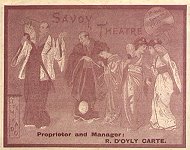
Jessie Bond appeared on stage for the last time in the third revival of The Mikado, which opened at the Savoy on July 11th 1896, although she made guest appearances in galas after this date. The production also featured Rosina Brandram of the original cast, and closed after 226 performances, on February 17th 1897. |
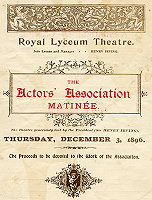 |
Trial by Jury Benefit matinee for the Actors' Association at the Lyceum Theatre, December 3rd 1896. Concluded with Trial by Jury, with Rutland Barrington as Judge. Florence Dysart appeared as Plaintiff, a role she had played in the 1884 Savoy revival. Walter Passmore was Foreman, and other Savoyards in the cast included Charles Kenningham, Charles Childerstone and Edith Johnston. Elsewhere on the bill, Henry Irving gave a recitaion and George Grossmith (Jnr.) appeared in a scene from A Night Out. |
| 1897 |
 |
The
Fortune-Hunter
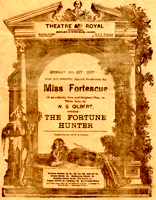
This three-act drama opened at the Theatre Royal in Birmingham on 27th September 1897, then transferred to the Theatre Royal in Edinburgh for a further six performances from 4th October. According to Clarence*, the piece also played at the Crouch End Opera House, opening on October 18th. It does not appear to have had a Central London production. May Fortescue, the original Celia in Iolanthe and creator of many original parts in Gilbert's straight plays, starred in the piece. |
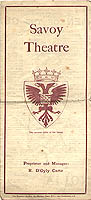 |
Yeomen of the Guard Programme for the first revival of Yeomen at the Savoy, which opened on 5th May 1897 and ran for just 186 performances. Richard Temple, Rosina Brandram and H.Richards (Headsman) appeared in their original parts. |
| 1898 |
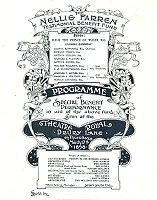 |
Trial by Jury Nellie Farren, star of Thespis, was, by the late 90s, crippled and unable to work. The funds raised for her at this benefit at the Theatre Royal Drury Lane on March 17th 1898 would provide for her for the remainder of her life. One of the most star-studded events of the decade, the show included a performance of Trial by Jury with Gilbert himself playing the Associate, as well as the premiere of a J.M. Barrie playlet. Marie Lloyd, Ben Davies, Ellen Terry, Henry Irving, Clara Butt, Dan Leno, and many others (including a host of Savoyards) are named. |
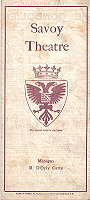 |
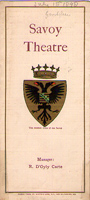
Gondoliers - first revival The Gondoliers was given its first revival at the Savoy on March 22nd 1898, with only Rosina Brandram of the original cast repeating her role. There was one cast change during the 62 performance run, but this programme, dated 19th May, shows Emmie Owen as Gianetta. In some programmes during this run Mildred Baker is listed as playing the mysterious character Carlotta! The revival closed on May 21st to make way for The Beauty Stone, which is advertised on the bottom inside edge. |
 |
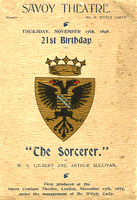
Gondoliers - back again Following the failure of The Beauty Stone, The Gondoliers returned for a further 63 performances between July 18th and September 17th 1898. This first night programme for the revivification of the first Gondoliers revival shows that Sullivan did not conduct as this was not considered an "opening" as such. The cast was somewhat changed from the earlier segment of the run, with Robert Evett as Marco, Blanche Gaston-Murray as Tessa and Mildred Baker as Vittoria (Carlotta is not listed). |
 |
The Sorcerer / Trial By Jury The second Sorcerer revival opened at the Savoy on Sept 22nd 1898, and ran for 102 performances, in tandem with Trial by Jury, closing on New Year's Eve. Thursday November 17th 1898 marked the 21st anniversary of the opening night of The Sorcerer, and to mark the occasion D'Oyly Carte produced this souvenir booklets, presumably available only to those present on the night. It includes photographs of all the leading characters in all the productions to date. |
| 1899 |
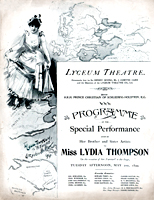 |
Lydia Thompson's Address Actress Lydia Thompson had toured in Gilbert's The Wedding March, and when she retired from the stage a scene from that play was presented at her farewell benefit, with a cast including Rutland Barrington. Mary & Kate Rorke presnted a duologue from Gilbert's Tom Cobb, and among the many others who appeared in the various items played at the Lyceum Theatre on May 2nd 1899 were Rosina Brandram, Isabel Jay, Decima Moore, F. C. Burnand, Dan Leno and Ellen Terry. The afternoon ended when Thompson gave her address from the stage - a piece written by Gilbert in rhyming couplets, and printed in full in the programme. |
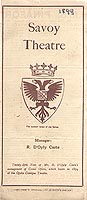 |
HMS Pinafore / Trial By Jury With only Richard Temple in his original role, HMS Pinafore was given its second revival (with Trial By Jury) on June 6th 1899. The production ran for 174 performances, closing on 25th November. This programme was printed on 11th October. |
| 1900 |
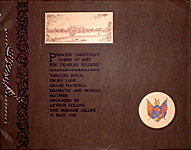 |
Trial by Jury Another of the grand benefit shows of the late Victorian/Edwardian period, the matinee for Princess Christian's Homes of Rest for Disabled Soldiers was held at Drury Lane on the afternoon of May 15th 1900. The show included an all-star performance of Trial by Jury with Gilbert himself playing the Associate (and Lady Bancroft, his wife), Barrington as the Judge, Courtice Pounds as Edwin, Passmore as Usher and Florence St. John as Angelina. Many celebrities appeared in the jury and crowd, including Decima Moore, Lytton, Pinder, Denny, and Lionel Monckton. Francois Cellier conducted and later on the bill Nellie Farren gave a recitation. |
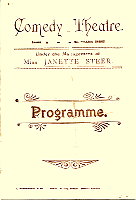 |
Pygmalion and Galatea / Comedy and Tragedy The two Gilbert plays were revived as a double bill at the Comedy Theatre on June 7th 1900, with Fuller Mellish and Janette Steer in the lead roles of both pieces. They ran together until 25th July, chalking up 42 performances. |
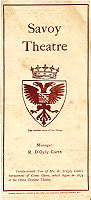 |
Pirates of Penzance Pirates was given its second revival at the Savoy, opening on June 30th 1900. Despite a short run of just 127 performances, there were a number of cast changes during the run. The work was preceded by The Outpost, adapted from the German piece by Korner. |
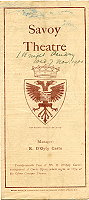 |
Patience The first revival of Patience opened at the Savoy on November 7th 1900, and ran for 150 performances until April 20th 1901. This opening night programme indicates that there was no curtain raiser before the first performance. |
| 1901 |
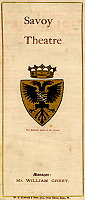 |
Iolanthe The first revival of Iolanthe opened at the Savoy on December 7th 1901, and ran for 113 performances until March 29th 1902. This programme is dated for the opening night, Dec 7th, although it was printed on the previous day. |
| 1902 |
| No Cards As part of a tribute to the German Reed Entertainments, No Cards was revived for just eight performances (all but one being matinees) at St. George’s Hall from Saturday March 29th to Saturday April 5th 1902. Also on the bill was Charity Begins at Home by B. C. Stephenson and Alfred Cellier, featuring Leonora Braham. |
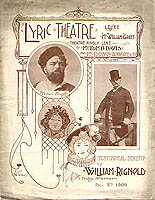 |
Trial By Jury The testimonial benefit for William Rignold, at the Lyric Theatre on December 5th 1902, was a chance for London's theatre community to pay tribute. Highlight of the afternoon was a performance of Trial By Jury, at which Gilbert himself played the Associate. Others in the cast included Rutland Barrington, Charles Childerstone, C. Hayden Coffin, Evie Greene & Lionel Monckton. Cox & Box was also on the bill, featuring Richard Temple, Powis Pinder and Vernon Cave. |
| 1904 |
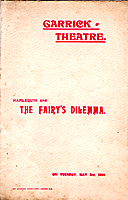 |
Harlequin & the Fairy's Dilemma - OPENING PERFORMANCE Gilbert's play Harlequin & the Fairy's Dilemma opened at the Garrick on May 3rd 1904. Described as "an original domestic pantomime", the dances were arranged by John D'Auban but the piece closed on 22nd July, after just 90 performances. The title was shortened to The Fairy's Dilemma in The Times listings after the second performance, though the full title appears to have been printed on programmes throughout the run. On opening night only the cover of the programme was printed in red, with the date in full. |
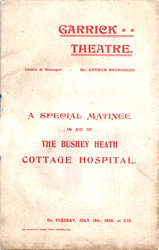 |
The Fairy's Dilemma & W.S. Gilbert in Rosencrantz and Guildenstern On Tues July 19th 1904, at 2.15pm, Harlequin & the Fairy's Dilemma was played at the Garrick as a special charity matinee in aid of Bushey Heath Cottage Hospital. Some of the ladies were played by understudies, most notably the Fairy Rosebud which role was taken by Elfrida Clement. This was followed by a single performance of Rosencrantz and Guildenstern, featuring W.S. Gilbert himself as King Claudius. Librettist Francis Burnand was "First Player", with dramatistLleo Trevor and composer Paul Rubens in the title roles. A, probably the, Bernard Shaw appeared in the starry chorus. |
| 1905 |
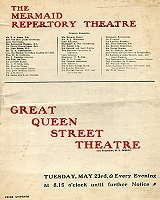 |
The Palace of Truth Revival of Gilbert's play at the Great Queen Street Theatre, which opened May 23rd 1905, this programme dated two days later. The production, by the Mermaid Repertory Theatre company, featured W.H. Kemble and Mrs Theodore Wright. Just 13 performances were given, the last on 3rd June. |
|
Comedy and Tragedy 17 performances of Comedy and Tragedy were given at the Criterion Theatre between 31st May and 15th June 1905. |
| 1906 |
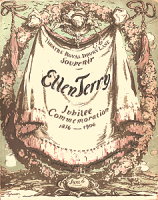 |
Trial By Jury Souvenir programme for the Ellen Terry Jubilee Commemoration at the Theatre Royal Drury Lane, June 12th 1906. This hard-back brochure gives full details of all the events including Trial By Jury with Gilbert himself as Associate. As well as familiar Savoyards in the solo parts, the production included many famous faces in the jury (e.g. Arthur Conan Doyle) and in the crowd (e.g. Rosina Brandram). |
| 1906/7 |
 |
1st REP SEASON at Savoy Theatre December 1906 to August 1907: If title is a link, a prog is in stock. Alternate casts, colours and original prices, if any, are detailed lower on the same page.
|
| 1908/9 |
 |
2nd REP SEASON at Savoy Theatre April 1908 to March 1909: If title is a link, a prog is in stock. Alternate casts, colours and original prices, if any, are detailed lower on the same page.
|
| 1909 |
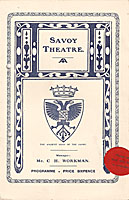 |
Fallen Fairies Gilbert's last musical play was, perhaps fittingly, a Savoy opera. Fallen Fairies, or the Wicked World, a musical adaptation of Gilbert's 1873 play,The Wicked World, had music by Edward German, and opened on 15th Dec 1909. Nancy McIntosh created the role of Selene, the Fairy Queen, but left the cast before Christmas Eve. This programme, dated 27th December, names her understudy, Alice Venning, although this name has been crossed out, and "Amy Evans" is handwritten in its place. There is no mention of the song Love Rules the World. It seems likely that Venning played the part for just a few nights either side of Christmas. |
| 1910 |
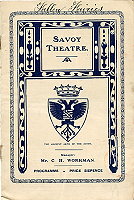 |
Fallen Fairies By the time this programme was printed, on 17th January, Amy Evans (misprinted "Evers" in some reference books) was playing Selene, against Gilbert's wishes. Love Rules the World had also been interpolated, despite Gilbert's attempt to block the song with a court injuction, and its inclusion is noted in the programme. The piece closed on January 29th 1910, after just 50 unhappy performances. |
| 1911 |
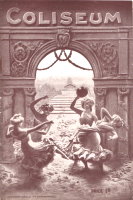 |
The Hooligan Gilbert's final play, The Hooligan, was a dramatic one-act piece. It premiered, as part of a variety bill, at the London Coliseum on 27th February, 1911. Over the coming four weeks The Hooligan played twice daily, except for the week of 13th March, when it was only seen in the evenings, being replaced by The Man in the Street at matinees. It appears to have been presented only 42 times before being withdrawn. This programme was produced for the first week. There was probably no specific first night programme produced. Gilbert died on 29th May 1911. |
|
BIBLIOGRAPHY & ACKNOWLEDGEMENTS Thanks to those who have helped build this webpage. The Gilbert & Sullivan Archive pages have been invaluable, as have contributions from John McLean, George Low, David Eden, Stephen Turnbull, Andrew Crowther and many others. To Alison Piano, a special thank-you for access to the fascinating research materials collected by her father, the Gilbert enthusiast, Philip Plumb. The Theatre Museum collection has also been an important resource - thanks to the staff there. Finally, thanks also to those who have offered to help fill image-gaps on these pages - however, all pictures are of items either currently or previously held in C20th stock. There is still much discrepancy between sources regarding run lengths (and occasionally even opening night dates) of Gilbert's plays. Information has mostly been gleaned from the following books: * Clarence, Reginald. The Stage Cyclopedia, Burt Franklin, 1909 (reprinted 1970) * Ganzl, Kurt. The British Musical Theatre, Vol 1, 1865-1914, Macmillan, 1986 * Wearing, J.P. The London Stage 1890-1899, Scarecrow, 1976 * Wearing, J.P. The London Stage 1900-1909, Scarecrow, 1981 * Wearing, J.P. The London Stage 1910-1919, Scarecrow, 1982
|